

In today’s digital world, businesses store nearly everything electronically; whether on local servers, in the cloud, or through a combination of both. While digital storage offers convenience and efficiency, it also introduces risk. Data can be lost, stolen, corrupted, or made inaccessible, and the impact often extends far beyond computers and networks.
The question is not whether data is valuable. The question is: “What would happen to your business, employees, and customers if you suddenly lost access to it?”
Data Loss vs. Data Breach
Although the terms are often used interchangeably, they describe two different situations.
Data Loss
Data loss occurs when a business no longer has access to its documents, records, or information. This can result from hardware failure, accidental deletion, ransomware, natural disasters, or corrupted systems.
Data Breach
A data breach occurs when an unauthorized party gains access to sensitive information. This may include customer records, financial data, employee information, or intellectual property.
A single cyber incident can involve both data loss and a data breach. For example, ransomware often encrypts company files (data loss) while also stealing information before locking systems (data breach).
How Data Incidents Affect Customers
When customers trust a business with their information, they expect it to be available, accurate, and protected.
Effects of Data Loss
- Inability to access accounts, records, or services
- Delayed shipments, transactions, or support requests
- Interrupted healthcare, legal, or financial services
For example, if a healthcare provider loses access to patient records, treatment decisions may be delayed, potentially affecting patient outcomes.
Effects of Data Breaches
- Financial fraud if payment information is compromised
- Identity theft
- Privacy violations involving personal information
- Time spent replacing payment cards, updating passwords, and monitoring accounts
For many customers, the inconvenience alone can be significant. The emotional stress of wondering whether personal information has been exposed often lasts much longer than the incident itself.
How Data Incidents Affect Businesses
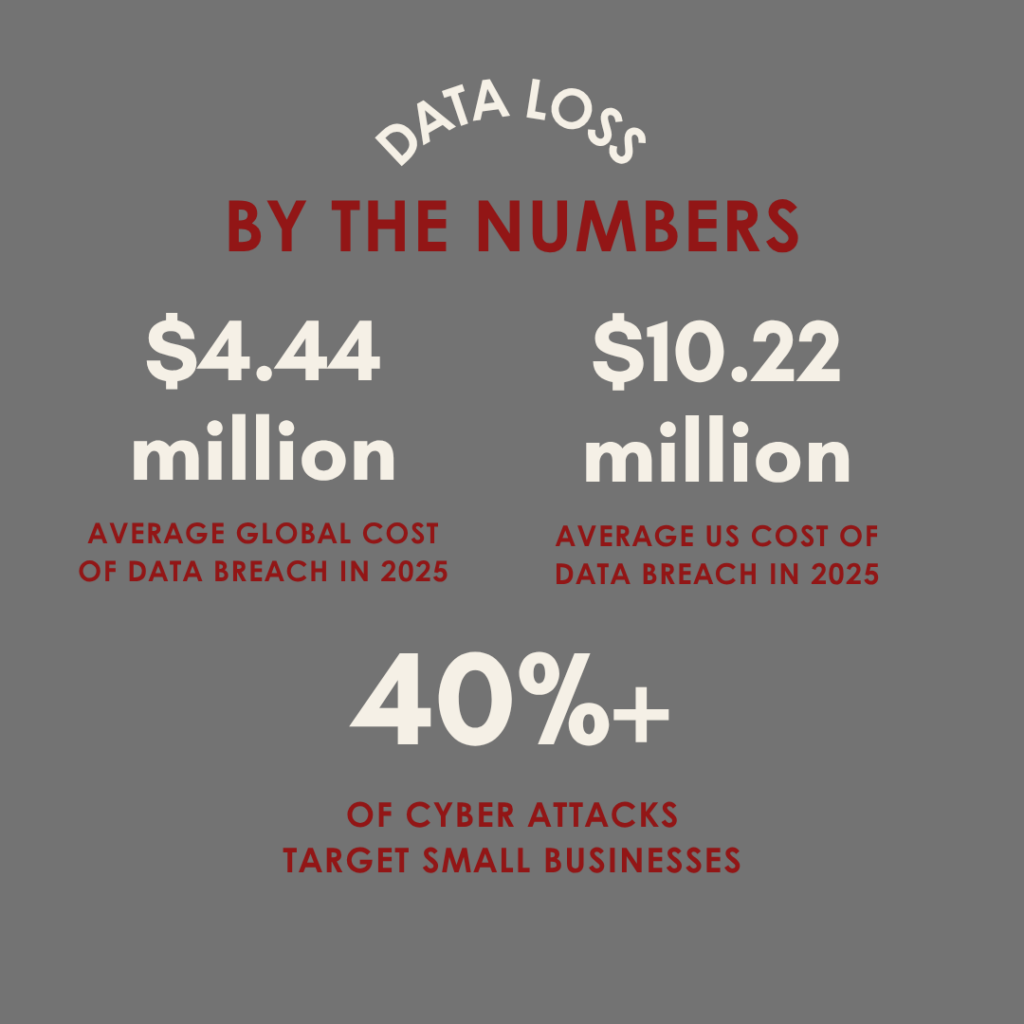
A serious data incident can threaten the survival of a company. According to IBM’s 2025 Cost of a Data Breach Report, the global average cost of a data breach is approximately $4.44 million, while the average cost in the United States has risen to more than $10 million per breach.
Operational Costs
- Loss of customer trust
- Customer turnover and canceled contracts
- Damage to brand reputation
- Business disruption and downtime
- Potential legal action
Research shows that organizations can experience weeks of disruption following a cyber incident, affecting productivity and customer service.
Financial Costs
- Cybersecurity and forensic investigations
- Data recovery efforts
- Credit monitoring and identity protection services
- Regulatory fines and legal settlements
- Increased insurance premiums
- Lost sales and revenue
- Employee overtime and recovery expenses
Time Costs
After an incident, businesses often spend hundreds of hours on:
- Customer notifications
- Regulatory reporting requirements
- Audits and investigations
- Customer support
- System restoration and recovery
These activities take employees away from their normal responsibilities, creating additional productivity losses.
How Data Incidents Affect Employees
Employees are often overlooked when discussing cybersecurity incidents, yet they frequently bear much of the burden during recovery.
Potential impacts include:
- Increased workloads and overtime
- Pressure from customers, vendors, and management
- Reduced bonuses or compensation tied to company performance
- Exposure of employee personal information
- Potential job losses if the financial impact is severe
For smaller businesses, the effects can be particularly damaging. Studies have found that a significant percentage of small businesses struggle to recover from major cyber incidents, with many closing within months of a severe attack.
Why Prevention Matters
Cybersecurity is not just an IT issue, it is a business continuity issue.
Modern threats are increasingly targeting small and medium-sized businesses because attackers know they often have fewer security resources than large enterprises. In fact, more than 40% of cyberattacks target small businesses, and phishing remains one of the most common attack methods.
The good news is that many incidents can be prevented or their impact significantly reduced through preparation and proactive security measures.
How Netcomm Inc Helps Protect Your Business
Cybersecurity Awareness Training
Your employees are your first line of defense. Regular cybersecurity training helps staff recognize:
- Phishing emails
- Social engineering attacks
- Malware and ransomware threats
- Password and account security risks
Many successful cyberattacks begin with a single click on a malicious email. Educated employees can often stop an attack before it starts.
Managed Backup and Recovery Services
Even the best security measures cannot eliminate every risk. Hardware fails. Human errors happen. Cybercriminals continue to evolve.
That’s why reliable backups are essential.
A comprehensive backup strategy should include:
- Offsite backup storage
- Cloud-based backups
- Regular testing and verification
- Fast recovery procedures
When data loss occurs, having secure backups and an experienced recovery team can mean the difference between a temporary inconvenience and a business-ending event.
Proactive Security Management
Preventing incidents is always less costly than recovering from them. By combining cybersecurity training, managed security services, and reliable backup solutions, businesses can reduce their risk and improve their ability to recover when unexpected events occur.
Because when it comes to data loss and data breaches, the question is not just what information was affected… it is how many people were impacted by its loss.